

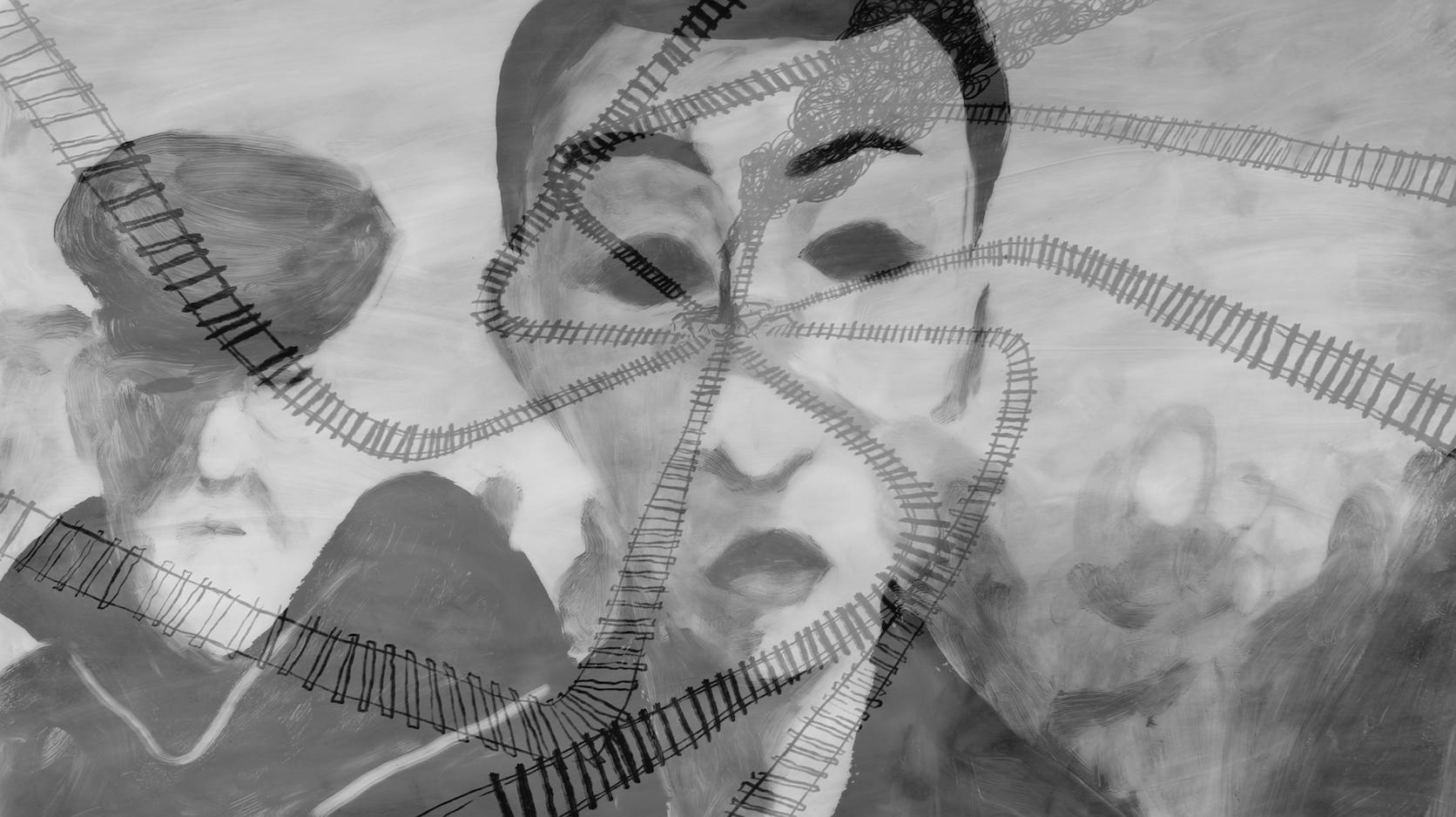
After seeing too many slickly produced and formulaic documentaries, I felt cynical and uninspired to write for a long time. Skillful cinematography and editing can create the illusion of a good documentary, but a story without authenticity, passion, or depth is not worth writing about. When I discovered Elie Wiesel: Soul on Fire, I decided it was time to return so I could highlight this moving new documentary. This humble film directed by Oren Rudavsky is a poignant biography of Elie Wiesel that uses hand-painted animation to show Wiesel’s memories and dreams.
In 1944 fifteen year-old Elie Wiesel and his family were living in Sighet, Transylvania (Romania) before they were forcibly sent to a concentration camp. Wiesel was subjected to forced labor and starvation. He witnessed torture and executions. He was able to stay with his father throughout most of their internment, until his father died of sickness and exhaustion. Wiesel’s mother and younger sister also died in the camps. His two older sisters Beatrice and Hilda survived. Wiesel’s first memoir Night details his experiences in the camps and became an internationally renowned book that is still taught in many American high school classrooms. Before his death in 2016 Wiesel had been a writer, professor, and activist against genocide. He was awarded the Nobel Peace Prize in 1986.
The documentary does not retell Wiesel’s experiences in the concentration camps chronologically, but instead focuses on how Wiesel processed these events throughout different phases of his life. Wiesel felt compelled to write down his experiences for fear the events of the Holocaust would be quickly forgotten. Interviewees in the documentary explain how eager people were to move on from the past and how challenging it was for Night to gain attention when it was first published in Yiddish in 1956. It wasn’t until it was trimmed down significantly and translated into French and English that it began to gain global attention.
Many documentaries dealing with the Holocaust often rely on the handful of photographs taken when the concentration camps were liberated or from individual families before their lives were changed forever. While this documentary does make use of Wiesel’s personal photos and video clips, animation is the main way in which memories, nightmares, and dreams are portrayed. These were beautifully hand-painted by Joel Orloff. There is only about 15 minutes of animation in the documentary, but it took Orloff nearly a year of intensive work to complete.1 Most animated segments are in simple black and white, but there are a few happy memories and dreams that use color. Each of these sequences is accompanied by Wiesel’s own words. They feature abstract and morphing images that try to depict the feelings and viewpoint of Wiesel. It is especially impactful when Wiesel recounts his dreams of someday reuniting with his parents and younger sister.
Rudavsky could have easily valorized Elie Wiesel and focused on his many awards and books, but he instead took a more personal approach. The stories featured from Wiesel’s life focus on his faith as well as his relationships with family and students. Most of the interviews are with Wiesel’s close family members or former students. His son Elisha features heavily in the film and is honest that he had a loving but complicated relationship with his famous father. The birth of Elisha is portrayed as a major turning point in Wiesel’s life, helping to restore his faith and hope for the future. From the start, Wiesel is shown as an ordinary person thrown into extraordinary circumstances by historical events. It is a humane and intimate portrayal of Wiesel’s struggles and successes as he chooses to embrace life after surviving one of the darkest moments of the twentieth century.
Ramin Zahed. “Joel Orloff Discusses His Animated Work on the Acclaimed Documentary ‘Elie Wiesel: Soul on Fire.’ ” Animation Magazine, January 26, 2026. https://www.animationmagazine.net/2026/01/animator-joel-orloff-discusses-his-animated-work-on-the-acclaimed-documentary-elie-wiesel-soul-on-fire/