

It was another great year for documentaries at IFFBoston, but a bad year for timely written reviews. I have three documentary highlights below, and I hope to follow up later this month with a more in-depth piece on Remake directed by Ross McElwee. His new feature documentary is a masterful return after a long hiatus, and there is a lot to delve into.
Between Moon Tides
Directed by Jason Jaacks

This poetic look at the saltmarsh sparrow is an intimate and thoughtful short documentary that reflects on loss and the responsibilities humans have to other species. It focuses on the efforts of conservationists at Jacob’s Point Reserve near Warren, Rhode Island who are working to protect saltmarsh sparrow ground nests that are threatened by the increased flooding. Deirdre Robinson is a naturalist in her 70s leading young and old volunteers in efforts to find nests amidst the tall marsh grass. Their goal is locate nests and create a simple gadget that will protect the ground nests from being flooded when the tide rises.
Breathtaking cinematography and intimate interviews make this a beautiful and moving piece. The composer has a light touch that sets a thoughtful mood and never overshadows the rich natural soundscape of the marsh and bird chirps. The emotional drama comes from contrasting images of the marsh and the sparrows. There are wonderful lingering close-ups of the sparrows and their hatchlings, but also devastating shots of the flood waters’ deadly aftermath.
The storytelling and solemnity of this short documentary reminded me of an excellent short non-fiction book, Brief Eulogies for Lost Animals by Daniel Hudon. It has several short thoughtful eulogies about extinct species. Sometimes these are simple descriptions of the animal’s habits and appearance. Other entries are more expansive touching on the years of human exploitation that led to their extinction. Several extinct bird species are profiled in this book, many of which were hunted for their beautiful feathers. It is a mournful companion to the documentary, but also a powerful motivator to protect vulnerable species.1
Between Moon Tides is currently available to stream for free online via The Guardian.
Seized
Directed by Sharon Liese
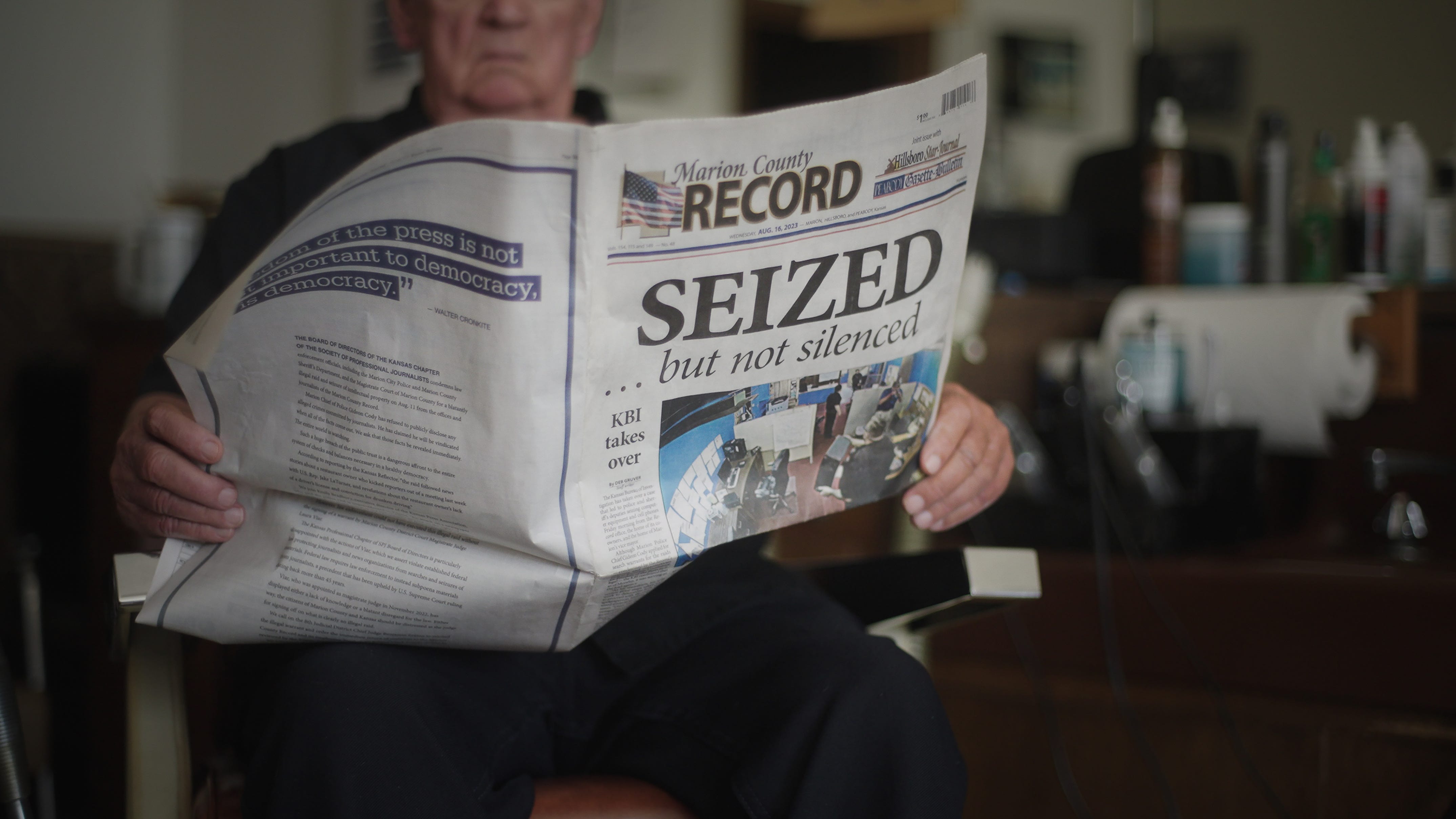
Going into Seized I was expecting a simple story of journalistic heroism, but was surprised to watch a more complicated portrait of a small city’s animosity towards journalists. The documentary centers on newspaper owner and reporter Eric Meyer and his small staff at The Marion County Record in Marion, Kansas. In 2023 local police raided the homes of Record reporters and their headquarters. The police raid on their home caused Meyer’s 98 year-old mother and Record co-owner Joan Meyer so much stress that she died of a heart attack the next day. The raid and sudden death became national news and highlighted the continued attacks on the free press.
The structure of the documentary jumps between then present day Marion and security camera footage from the day of the raid. It slowly unravels the mystery as to why the police raided the newspaper, and shows the impact the raid had on the paper and local community. Instead of standing by Meyer and the Record, some citizens turn against it, because they feel the paper is not working in the town’s best interests. Meyer decides to sue the city because of first amendment violations.
The director is clearly sympathetic to Meyer and the paper’s mission, but she also captures the viewpoints of his opponents in an evenhanded way. Mayor Mike Powers, who was elected after the raid, laments he is in an impossible bind and worries the filmmakers might portray him as a villain. He comes off as an honest hard-working elected official in a tough situation, but it is clear that he sees negative press and the lawsuit as a major threat to the city.
Meyer is not portrayed as a perfect hero either. In scenes and interviews he sometimes seems distant, combative, and even mean at times. But despite his flaws, it is clear Meyer has a sincere sense of responsibility to unearth stories that impact his community, such as tainted drinking water and police officer misconduct. His perseverance is admirable despite the negative blowback from his neighbors.
But after watching the documentary, I felt a sense of despair about local journalism. Any city would be lucky to have a dedicated reporter like Meyer. Years ago my local paper, The Sentinel & Enterprise, was bought out by a large corporation and it is a shell of its former self. I often wonder how different my city and the United States might be if we had widespeared reliable local news.
Mata Hari
Directed by James Smith and Joe Beshenkovsky
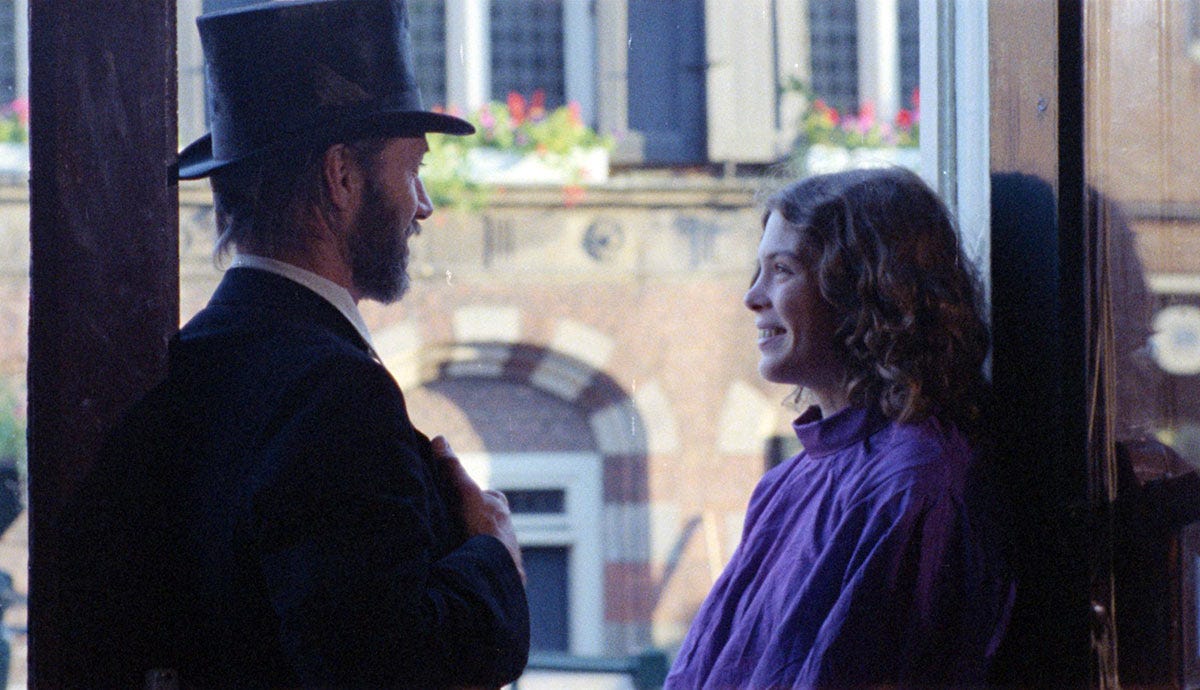
In 1977 actor David Carradine began production on a feature film, Mata Hari, starring his estranged teenage daughter Calista in the title role. That film was based on the life of Margaretha Geertuida Zelle (1867 – 1917), a Dutch exotic dancer who went by the name Mata Hari and later became a spy.2 Carradine became famous for his hit show Kung Fu, but later sullied his reputation by taking any role to help finance his massive film project. Mata Hari was never completed, but the footage and behind the scenes shots were the basis for this new documentary.
The fiction film Mata Hari was not going to be a great or even a good film, but the select footage and behind the scenes moments are compelling after we learn about the complicated relationship between Carradine and his daughter. After not seeing her father since her childhood, Calista reestablishes contact and moves in with Carradine to escape her strict mother. Shortly after this, they start filming Mata Hari. It is uncomfortable from the start because a young teenager has to portray an exotic dancer and her father is the director. The situation is weird, but Calista and her father deeply enjoy working together. There is a fun and reckless atmosphere on set. Multiple scenes feature tense arguments and strange moments of multiple actors being high and having to redo shots over and over again.
This wild found footage could have easily held up the narrative on its own, but a flaw of the documentary is that it relies too heavily on voice-over from David Carradine. His voice-over clips are excerpts from his 1995 autobiography Endless Highway. Carradine died in 2009, and these excerpts were read by an AI mimicking his voice. The AI read excerpts in a thoughtful neutral tone, which was in great contrast to the real David Carradine we see in the found footage, who often appears high or mercurial. Regardless of whether these were recited by a human actor or a bot, I don’t think they served the documentary well. There were multiple crew members and Calista who spoke about their experiences on set. Ample archival footage of Carradine was available. Calista’s real human voice-over is also used throughout, but is sometimes overshadowed by her father’s voice.
Despite my deep dislike of the AI voice-over for David Carradine, there is still a treasure trove of found footage that makes this an unusual and arresting story. It showcases both tender and dark moments between Calista and Carradine, and never gives easy answers about how we should judge this complicated father-daughter relationship.
One more thing I wanted to recommend to any fellow bird enthusiasts is a musical piece I recently encountered, Three Canticles of the Birds by John Luther Adams. Each movement highlights a different California bird. These capture not only the grace of birds, but some of the nervous fast energy I have observed.
Photographs and a detailed biography of the historical Mata Hari are available on the Fries Museum website.