

Ever since I read David Thomson’s book The Fatal Alliance, I have become more critical of how fiction and documentary films depict war. Thomson makes the damning argument that many supposedly antiwar films actually glorify war by illustrating it as full of excitement, Hollywood glamour, bravery, and camaraderie no matter how morally wrong the conflict. There are only a handful of films Thomson mentions that have an effective antiwar message. Most of these narratives focus on stories off the battlefield and impacts after a conflict.
But I am sure that Thomson would appreciate the animated films at this year’s Fantasia Film Festival that made an emotional and impactful argument for peace. The feature Cocoon: One Summer of Girlhood from Japan and the short Jeem 1983 from Lebanon both use the perspectives of children to convey the senselessness of war and how innocent civilians suffer some of the worst consequences.
Cocoon is a fictional story that follows a group of school girls who are recruited to help the war effort on their small island. It is based on the manga by Machiko Kyo and was directed by Yukimitsu Ina. The film was made to commemorate the end of World War II in Japan. A title card introducing the film said it was important to remind people of the consequences of war now that the generation who experienced World War II would soon be gone.
At first the young girls feel excited and proud to be helping with the war effort. They no longer have classes and in between work they roam about freely on their beautiful island. There is a scene early on in which they skillfully camouflage their huts when they receive an alert that enemy fighter planes are coming. All the girls are safe and celebratory afterwards. But the story takes a dark turn when the girls are asked to serve as nurses in a hidden military base cave.
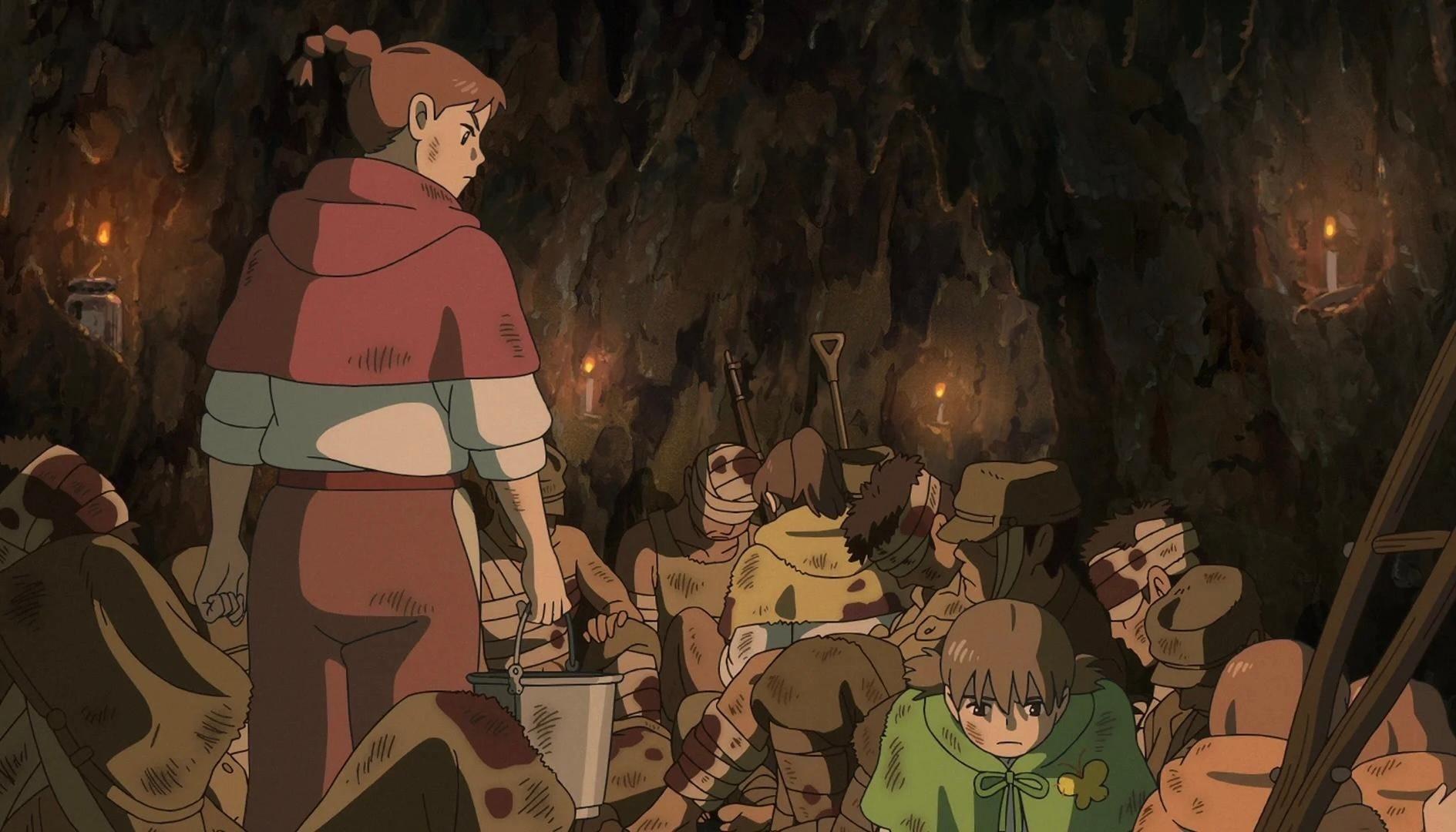
After San loses a friend who is shot while getting water, she begins to question the war effort. One day, when the hideout is flooded with wounded soldiers, San voices some of her doubts to the other girls. But as soon as she does so, her classmate viciously scolds San saying that the country’s interests are her interests, and that by serving the country San is serving herself. This logic doesn’t sit well with San, but she continues to work to the point of exhaustion. It is a powerful scene and major step towards San finding the courage to make her own moral choices outside the strict bounds on patriotism.
Cocoon at first shields the viewer from violent deaths. For about two thirds of the film blood is depicted as colorful splashes of flower petals. It is as if San is refusing to see the gory reality. But towards the end of the film, red blood is shown and it is quite shocking after seeing only flower petals. I appreciated this approach because it showed how a child might cope with intense violence by blocking it out or using their imagination to make it less real. When San finally sees the real blood, it is as if she has now become an adult and fully realizes the horror around her.1
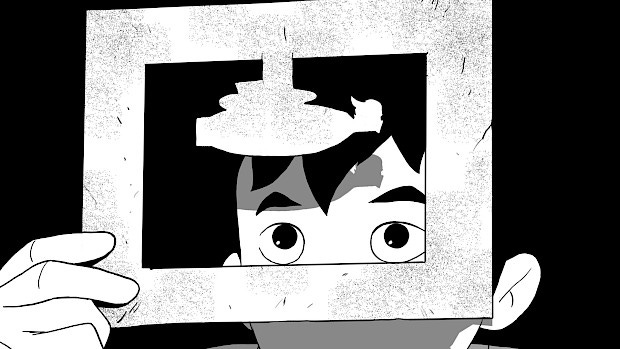
The flower petal device was similar to a stylistic approach in Jeem 1983 directed by Jorj Abou Mhaya. A young boy named Jeem uses his imagination to transform the war-torn streets of Beirut. People and the city are drawn in a stark black and white comic-book style. The only color comes from spray paint bottles that Jeem uses. He imagines pausing the war and that a giant robot helps transport him throughout the city. Jeem rushes to different people who are frozen in fighting or fear. He exuberantly paints colorful flowers and landscapes around the black and white scenes of suffering and chaos. It is a simple fantasy of child, but raises the question why do we tolerate such a dark world? Why are these images of kindness and peace limited to a child’s imagination?
The short film is fictional, but is loosely based on writer and producer George Maktabi’s own experiences as a child during the civil war in Lebanon. The war lasted 15 years from 1975 to 1990. Maktabi’s father was killed during the conflict and several scenes in the short film are direct references to photographs taken by journalist Ramzi Haidar. Being unfamiliar with Haidar’s work, it was devastating at the end of the film to see that the cartoon soldiers and children Jeem encountered were from photographs of real people.
These two fictional films are based on real past wars, and it was impossible not to reflect on the children suffering in war zones today. Both animated films have similarities to a 2024 shorts program From Ground Zero, which included several short documentaries and fiction films about the experiences of children in Gaza. These shorts intentionally avoided well-known political disagreements and instead focused on personal stories and the trauma children had to process. In my opinion, this humanistic approach has been the most effective way of finally turning public opinion in the United States against the war in Gaza. There is never any justification for harming or killing children, no matter how important an ally is or how noble a cause may seem.
Where to Watch:
Cocoon: One Summer of Girlhood will be released in theaters across North America beginning September 4, 2026.
Jeem 1983 is not currently available online. Follow their Instagram page for festival updates at https://www.instagram.com/jeem.1983/
From Ground Zero is available to stream for free on Kanopy (access through your library or university) and is also available to rent on Amazon Prime.
I just wanted to mention another extraordinary antiwar animated film called Grave of the Fireflies (1988) directed by Isao Takahata. If you are interested in Cocoon, then this is a great companion piece. It is about two young siblings trying to survive in Kobe, Japan after their city has been heavily bombed towards the end of World War II.
I have Kanopy! Will check out From Ground Zero.