

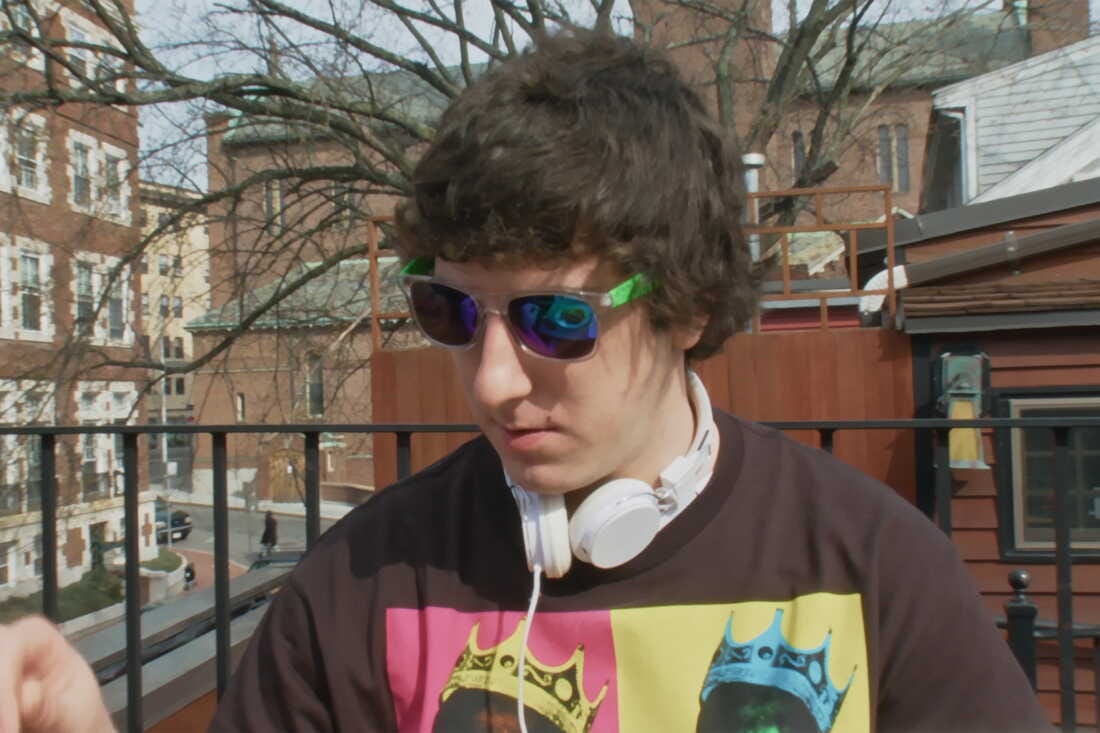
Remake has been on my mind quite a lot since seeing it last spring. I’ve tried to write this article a handful of times, but it has felt daunting to write about a filmmaker I have admired for years. Director Ross McElwee is a personal documentary filmmaker best known for Sherman’s March (1986). This hilarious documentary is a thinly veiled historical documentary about American Civil War General William Sherman which actually mostly follows McElwee’s failed attempts at dating. Many of his other major documentaries have highlighted his personal and family history. Remake is his first feature in over ten years. It is about McElwee’s relationship with his son Adrian and coping with Adrian’s tragic death at the age of 27 due to an overdose.
Some reviewers will claim “you don’t have to see his other films to appreciate this one…” but I strongly disagree. Remake’s power comes from knowing McElwee and how he has portrayed his family throughout different times in his life. I see Remake as being the third documentary in a trilogy of father-son focused documentaries. In Time Indefinite (1993) McElwee is coping with the loss of his father and the challenges of becoming a father himself. Throughout Photographic Memory (2011) McElwee is looking back on his youth while also trying to reconnect with his then teenage son Adrian. Remake takes moments from both of these past documentaries and reflects on the images in a new way. What were moments of joy from Time Indefinite are now looked on with pain and bitterness. Adrian is seen as a healthy toddler without any knowledge of the future. There are glimpses from McElwee’s wedding to Marilyn Levine, a marriage that would later end in divorce. Scenes of Adrian’s projects and plans from Photographic Memory no longer seem funny or sophomoric, but can be read differently now that we have more information about Adrian’s struggles with bipolar disorder during that time.
A major difference between Remake and most of McElwee’s other work is how much he incorporates Adrian’s footage and perspective. Adrian created music videos, stunt videos, but also tried his hand at more serious long form documentary content. Before he died, Adrian had been working on a documentary about him and his friends living on the fringes of society in Colorado. One scene included in Remake is of Adrian recording himself using heroin. McElwee mentioned in an interview in Documentary Magazine that it was a challenging decision to include this footage, but that he felt it was necessary to show Adrian’s struggles and perspective.1 This scene represents a starker world view than anything in McElwee’s previous work, but I think it gets to heart of how different Adrian and his father were despite their shared interest in filmmaking.
Adrian and McElwee also differ a lot in their views of success and fame. There’s a segment in which we see Ross’s life as a successful filmmaker – going to festivals, staying in nice hotels, and getting offers from Hollywood to remake Sherman’s March. Ross seems somewhat indifferent to this more glamorous aspect of success, but Adrian appears to relish these moments. Adrian encouraged Ross to pursue a Hollywood version of Sherman’s March. The twists and turns of a potential fictionalized film or television series of Sherman’s March becomes an entertaining subplot of the documentary. This was actually the original premise of Remake, but the film changed substantially after Adrian’s death.
Like in his other films McElwee is reflective about how others are impacted by his filming, but here it takes a darker tone with him wondering if recording Adrian so much was bad for him. Adrian is a natural on screen and seems comfortable in front of the camera, but there are a handful of uncomfortable moments. This is powerfully highlighted in a strange, but memorable scene in which Adrian and McElwee are having breakfast together and recording each other at the same time. The editing is constantly switching between the two and each looks absurd recording the other. Their conversation is cordial, but it feels tense.
This scene is exactly how I had imagined McElwee in daily life – as always trying to film everything in his life. After the screening ending, I half expected him to come out with a camera in hand for the Q&A session. That didn’t happen, but the Q&A session did take an unexpected turn. The moderator asked this exact question – how much of his life did he record? McElwee tried to convince the audience that he only recorded a small fraction of his life.
Many filmmakers were in attendance and wanted to know about the filmmaking process like working with a second editor or sorting through a lifetime’s worth of footage. McElwee praised his second editor, but admitted it was still painful to talk so much about the film. He seemed nervous, sometimes rocking back a little in his chair. Finally the moderator called on an older woman in the crowd. The woman said that she wasn’t a filmmaker, but that she loved the film and was moved by it because of her own son’s struggles with addiction. She said she was sorry for his loss. The audience and moderator were silent for a moment and then Ross thanked the woman in the crowd.2
The woman in the audience had gotten to the heart of the matter. I like McElwee’s documentaries not because he is some genius auteur, but because I relate to him and how he sees the world. I too have family members that have struggled with addiction and mental illness. Seeing these intimate and authentic moments between Ross and Adrian is moving, and will cause any viewer to reflect on their own life and family.
Remake is currently screening in select theaters across the United States.
MacDonald, Scott. “Remaking Life.” Documentary Magazine, 6 April 2026, https://www.documentary.org/feature/ross-mcelwee-discusses-remake-loss-his-son-and-returning-filmmaking-after-more-decade-long.
Q&A session with Ross McElwee after the April 25, 2026 IFFBoston screening of Remake.