

Last week I saw several features and shorts at the Fantasia Film Festival, which was unlike any other festival I’ve been to. It is focused on fantasy, horror, science-fiction, and animation. The fan base was intense, quirky, and rambunctious during screenings. At every screening people would clap along with a commercial for the Montreal airport and then meow in the darkness before the film started.1 On day one I thought this was very weird, but by the end of my visit I was clapping and meowing along with the crowd. The Small Gauge Trauma international showcase was one of my favorite screenings because several creative and thought-provoking short horror films were all in one program.
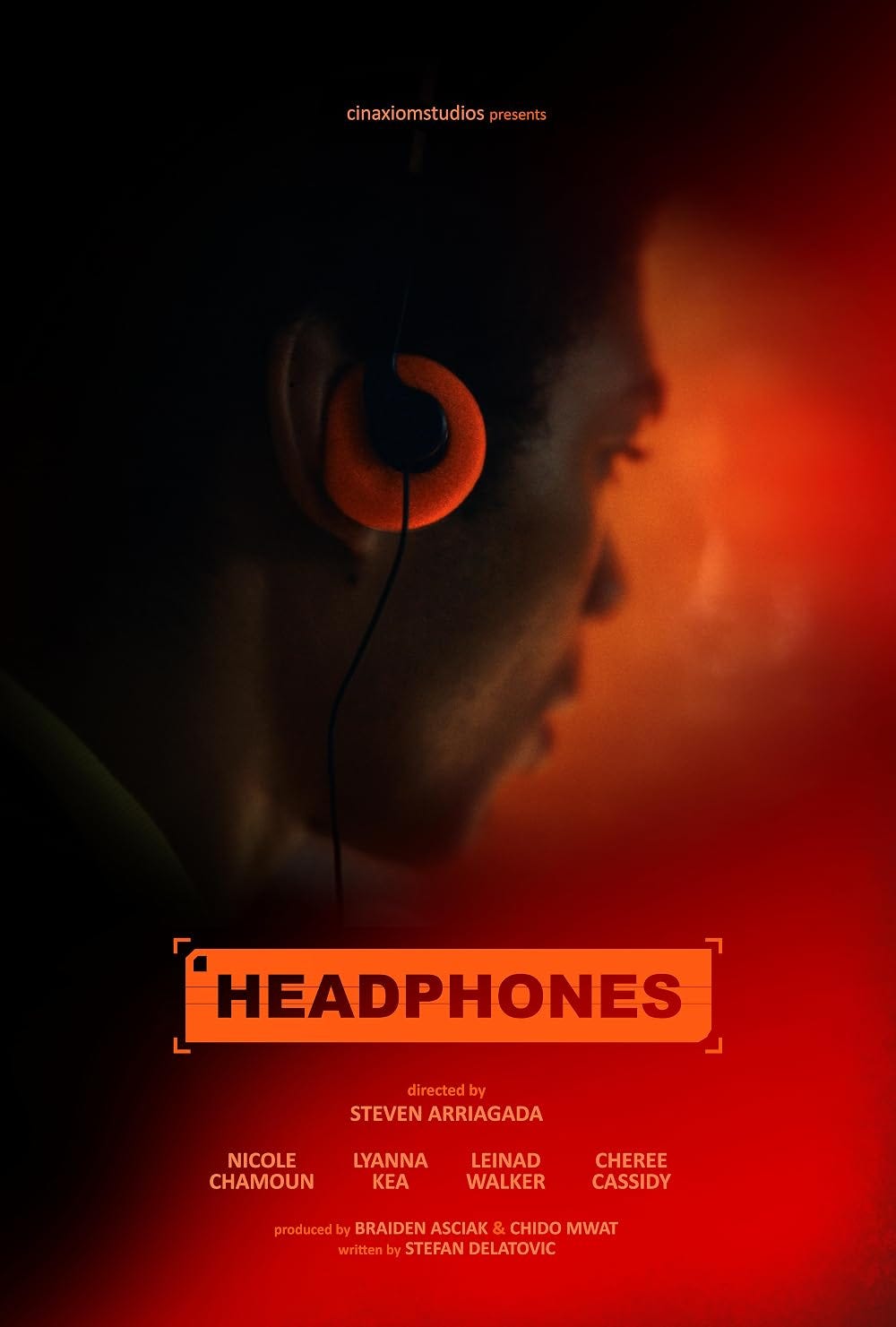
The program opened with the mysterious “Headphones” (Australia) directed by Steven Arriagada. A young man is working at a rundown fast food mall kiosk with his friend, and suddenly starts to hear a voice coming from his headphones with peculiar instructions. The voice warns him if he doesn’t listen to her, then his friend will die. It’s unclear whether the voice is there to help or harm the protagonist. The strange setting and sometimes bizarre instructions from the voice made this a funny and nerve-wracking piece. It leaves us with more questions than answers at the end, but is a tight and effective short.
“Exhibit” (Germany) directed by Lars Bürmann was a surreal take on exploitation. The artist Annette houses a young addict named Kim, but in exchange asks her to model for paintings. It is clear Kim is uncomfortable posing for Annette, but continues to do so because Annette provides her with pain killers. This had a memorable surrealist style and raises uncomfortable questions about the intention of artists and charities. Director Lars Bürmann was candid during the talkback that it was a critique of what society asks for in exchange for offering help to the most vulnerable.
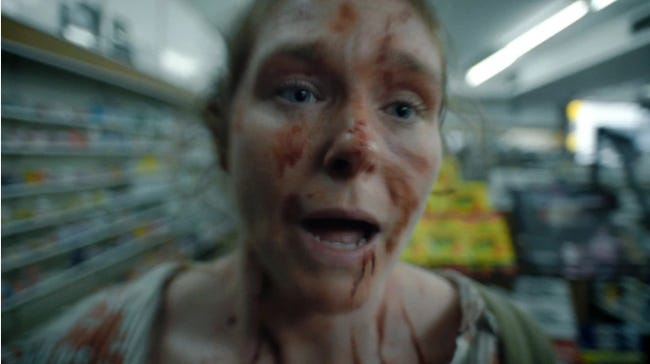
“This is a Zombie Movie” (U.S.) directed by Elizabeth Perla is a political short that uses humor as a way of critiquing the American housing crisis. The film takes place in a U.S. city in the south during the beginning of a zombie outbreak. The main character Mara is a sloppy and hapless young woman who gets bit at the start of the film. But even in a zombie apocalypse Mara has to find a way to get the antidote shot without insurance and avoid getting evicted from her apartment. The bad luck and clumsiness of Mara is the main source of humor, but the actress gives a sympathetic and authentic performance, so that we are still on Mara’s side. Although an absurdist comedy, it was a painfully realistic depiction of how the weak social safety net in the United States often fails during major health and climate catastrophes.
“Bruised Sky” (UK) directed by Gary Kent stood out for its stunning cinematography and strong ensemble of actors. At the festival it won the Gold Audience Award for Best International Short. The film takes place in a rural English town in the 1970s. Two teenage friends, Tommy and George, are having a fun afternoon and decide to visit George’s friend Dean. Dean is a man in his 60s who works in television and is eager to share his film and camera gear with the two young men. The characters are seen shooting on 16mm and the film is shot in 16mm, so this gives the whole piece an uncomfortable and realistic feeling. But even with great cinematography, this film might have failed without the realistic and nuanced performances of the actors. Dean could have easily been a caricatured, but the actor manages to come off as both a friendly old fool and a calculating criminal. During the talkback the director mentioned that story was inspired by real life serial killers in the UK and Texas. I think this piece exemplifies the power of a short, because as a feature it might have told a story we have seen many times before. Because the majority of the film focuses on a friendly encounter between three men, it makes us think more about friendship and betrayal rather than just a shocking crime.
A debate about the value of shorts versus features sprang up at the Q&A session after the screening. An audience member asked why the filmmakers would even make a short given that shorts always lose money. Some of the filmmakers replied it was a step to making a feature or the short was a proof-of-concept for a feature. Directors Elizabeth Perla and Lars Bürmann stood out by saying their films were more about putting forth a social critique. The Fantasia Artistic Director and event moderator Mitch Davis actually chimed in to defend the short film format. He said that a short often had a much longer festival run and could potentially be seen by more people than a feature, because indie features sometimes have a brief festival run before being bought up by a streaming platform. Unfortunately, indie features can often disappear into the abyss of thousands of other films online.
I agree with Davis’s assessment and would also argue that sometimes shorter is better. I know all the tricks and tropes of the horror genre, so I occasionally feel features don’t have enough substance to justify their length. Some of the best shorts in the showcase exemplified successful experimentation and nuance that might have been difficult to achieve as a feature.
These shorts are not currently available for online streaming, but stay updated with the filmmakers by following them on their websites or social media pages.
This Indiewire interview with Mitch Davis gives a great overview of the festival’s history and how the meowing tradition started: https://www.indiewire.com/features/interviews/why-audiences-meow-fantasia-fest-1235031036/.